What We Choose to Pass Down: Syrian American Parents and the Deliberate Work of Healing the Next Generation
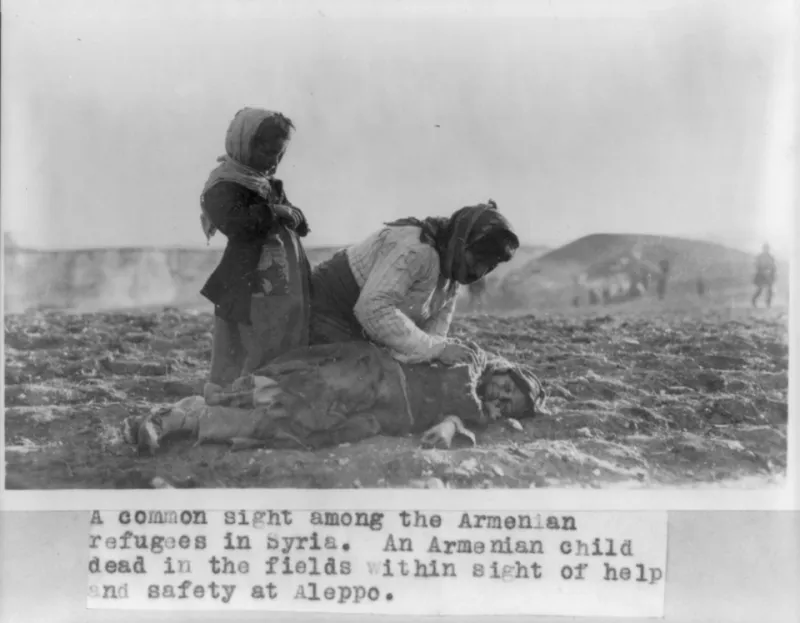
Photo: en:American Committee for Relief in the Near East, Public domain, via Wikimedia Commons
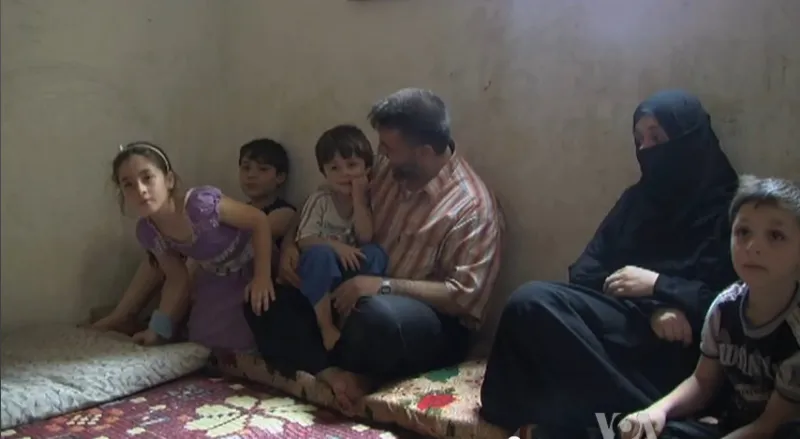
When Hana Barakat's daughter was seven years old, she came home from school and asked why some of her classmates had grandparents who lived nearby. Hana paused at the kitchen counter for a moment that felt much longer than it was. Then she sat down, took her daughter's hands, and began a version of the story she had been preparing for years — not the version that would frighten a seven-year-old, but not a sanitized fiction either. A true thing, told carefully.
'I had rehearsed it so many times,' said Hana, who left Aleppo with her husband in 2013 and now lives in suburban Nashville. 'I wanted her to understand where we came from without making her carry what I carry. I wanted her to have roots without having wounds.'
The distinction Hana draws — between roots and wounds — is at the center of a quiet but significant movement among Syrian American parents who are actively working to interrupt the transmission of intergenerational trauma. They are doing so through deliberate storytelling, through therapy, through cultural rituals preserved and recontextualized, and through a level of intentional parenting that reflects both the depth of their own pain and their fierce refusal to let it define their children's futures.
What Intergenerational Trauma Actually Means
The science of intergenerational trauma has evolved considerably over the past two decades. Researchers studying Holocaust survivors and their descendants, as well as communities affected by colonial violence and forced migration, have documented how traumatic experience can shape the psychological architecture of subsequent generations — not only through the stories parents tell, but through their bodies, their nervous systems, their patterns of attachment and response.
Children do not need to have experienced displacement to be shaped by it. They absorb it through the hypervigilance of a parent who flinches at loud noises, through the unspoken grief that settles over family dinners, through the particular way that certain subjects are never discussed and certain questions are never answered.
'Silence is not neutral,' said Dr. Yasmine Haddad, a clinical psychologist in the Chicago area who works extensively with Arab American families. 'When parents refuse to talk about what happened, children fill the silence with their own interpretations, which are often more frightening and more distorted than the truth. They sense the weight of what is not being said, and they carry it without any framework for understanding it.'
Conversely, parents who have processed their own trauma — or who are actively working to do so — tend to transmit a different kind of inheritance: not the wound itself, but a contextualized understanding of it, accompanied by evidence of survival, resilience, and meaning-making.
The Parents Who Are Doing the Work
What distinguishes the Syrian American parents who are most successfully navigating this challenge is not the absence of trauma — virtually none of them have escaped it — but the presence of intentionality. They have made a decision, often at considerable personal cost, to confront what happened to them before it passes, unexamined, to their children.
For many, this has meant engaging with therapy for the first time, overcoming the significant cultural stigma that surrounds mental health treatment in many Arab communities. The shift is not universal, but it is visible, particularly among younger parents and those with more exposure to American psychological culture.
Tarek Mansour, a Syrian American father of three in the Dallas area, began seeing a therapist two years after arriving in the United States. He had not planned to. A friend mentioned it offhandedly, and something in him recognized that the rage he was carrying — at the regime, at the international community, at the randomness of his own escape — was beginning to leak into his interactions with his children.
'I was not hitting them. I was not cruel,' he said carefully. 'But I was not present. I was somewhere else, back in Syria, and they were here needing a father. Therapy helped me come back.'
Tarek now speaks openly with his children, ages nine, twelve, and fifteen, about Syria — not about every detail of what he witnessed, but about the country as it was, the people who shaped him, the reasons the family left, and the values he carried with him across the ocean.
Reclaiming Culture as an Act of Healing
For many Syrian American parents, cultural reclamation has become inseparable from the work of trauma interruption. The logic is straightforward: if children are going to inherit something from their Syrian heritage, parents want to ensure that it is not only loss.
This takes many forms. Some families have made a point of learning or re-learning Syrian folk music, embroidery traditions, or regional cooking practices that might otherwise have been abandoned in the chaos of displacement. Others have created deliberate rituals — annual gatherings, storytelling evenings, Arabic-language commitments — that ground children in an identity that predates the war.
Hana Barakat hosts what she calls a 'Syria night' once a month in her Nashville home. Her daughter, now eleven, helps prepare the food, listens to her parents and their friends talk about Damascus, and sometimes asks questions that Hana could not have anticipated. Last month, she asked whether Syria would ever be beautiful again.
'I told her it was still beautiful,' Hana said. 'I told her that the people who destroyed buildings could not destroy what those buildings meant to us. I don't know if that is true. But I believe it. And I want her to believe it too.'
The Question of How Much Truth to Tell
The most contested terrain in these parenting journeys is the question of how much children should know, and when. There is no consensus, and the disagreements among Syrian American parents on this point are real and sometimes heated.
Some parents believe in radical transparency — that children who understand the full scope of what happened are better equipped to process it and to engage with it as future advocates and citizens. Others worry that burdening children with adult horrors before they have the developmental resources to integrate them does more harm than good.
Dr. Haddad suggests that the answer is neither full disclosure nor protective silence, but developmental attunement. 'A five-year-old and a fifteen-year-old can both handle truth, but they need different truths, told in different ways,' she said. 'The goal is not to protect children from their family's history. It is to give them the history in doses they can metabolize, with the support they need to make sense of it.'
What the research consistently supports is the importance of the emotional context in which information is delivered. Children who learn about their family's trauma from parents who have done their own processing — who can speak about difficult events without being destabilized by them — are more likely to integrate that knowledge into a coherent identity rather than a fragmented anxiety.
The Inheritance They Are Building
What strikes observers of this generation of Syrian American parents most forcefully is not the pain, which is evident and real, but the extraordinary deliberateness with which so many of them are approaching the future.
They are reading books on childhood development. They are finding therapists who understand cultural context. They are arguing with their own parents about what the grandchildren should be told. They are making, in the midst of grief and displacement and the relentless demands of building a new life, a sustained effort to ensure that their children inherit their resilience rather than their wounds.
'My parents never had this conversation,' said Tarek Mansour. 'Their parents never had it either. Somebody has to be the one who stops and says: this ends here, with me, in this generation. That is what I am trying to do.'
Hana Barakat's daughter, for her part, now tells her classmates that her family is from Syria — not with apology, not with the careful vagueness that once characterized her mother's early years in America, but with something that resembles pride. She knows the names of the streets her parents grew up on. She knows some of the words of a lullaby her grandmother sang. She does not know everything. She does not need to yet.
She knows she comes from somewhere real, and that it matters, and that the people who came before her were more than what happened to them. For now, her mother has decided, that is enough.