Going Back to a Place That No Longer Exists: The Moral Reckoning of Syrian American Return Visits
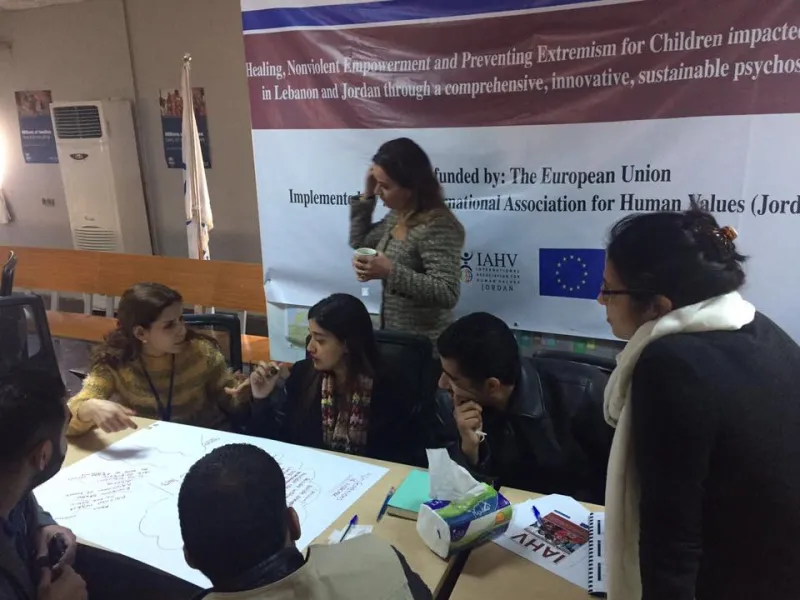
Photo: Miriammee, CC BY-SA 4.0, via Wikimedia Commons
Samer Younes had rehearsed the visit in his mind for two years before he finally booked the flight. He imagined himself arriving at the camp in northern Jordan with supplies, with money, with the particular authority of someone who had made it to America and come back to help. What he had not rehearsed was the silence that fell over his uncle's family when he walked in. Not the silence of grief, though that was present. The silence of people who were not entirely sure what he represented — rescue, guilt, or something more complicated than either.
'They were glad to see me,' he said. 'But there was something underneath that. Something I didn't expect. Like I had come to witness their suffering and then I would leave again. Which, of course, I did.'
Samer, who now lives in San Diego and works in logistics, is one of a growing number of Syrian Americans who have made what some in the community quietly call 'the trip' — a return visit to Syria itself, or to the refugee populations scattered across Jordan, Lebanon, and Turkey. These journeys are motivated by love, by obligation, by an aching desire to close the distance that safety has imposed. They are also, increasingly, the subject of difficult conversations about what such visits accomplish, whom they serve, and what they cost everyone involved.
The Guilt That Travels in Both Directions
Psychologists who work with diaspora communities have a term for the particular variety of distress that shapes these journeys: survivor guilt, though in this context the word 'survivor' requires some unpacking. Syrian Americans who left before the war, or who were already in the United States when the conflict began, did not survive a specific event so much as they survived a trajectory — one that their relatives, through circumstance or choice or the sheer randomness of which visa application was approved, did not escape.
This form of guilt, diffuse and persistent, does not resolve through action. Visiting does not cure it. Staying away does not either.
'What I see in my clients is a loop,' said Dr. Mona Saleh, a therapist based in the Washington, D.C., metro area who specializes in working with Arab American clients. 'They feel guilty for not going. They go, and they feel guilty for leaving. They come back and feel guilty for being relieved to be home. The guilt is not about what they have done. It is about the fundamental unfairness of who got to be safe.'
For many Syrian Americans, the decision to visit is entangled with a need to prove something — to themselves, to their families abroad, perhaps to their American friends and colleagues who ask politely about 'the situation over there.' The visit becomes a kind of credential, evidence that one has not entirely abandoned the connection.
The Performance Problem
There is a harder conversation happening at the edges of the Syrian American community, one that most people are reluctant to voice publicly: the concern that some return visits have taken on a performative quality that serves the visitor's psychological needs more than it serves those being visited.
Social media has complicated this dynamic considerably. Photographs taken in refugee camps or in the rubble of Syrian cities circulate through diaspora networks, generating sympathy and admiration for those who 'went back.' The optics of return — the tearful reunions, the distribution of supplies, the documentation of devastation — can slide, sometimes imperceptibly, from genuine solidarity into something that critics have begun calling 'disaster pilgrimage.'
'I have spoken with people inside Syria who find these visits exhausting,' said one Syrian journalist, who asked not to be named because members of her family remain in the country. 'They love their relatives. They are glad to see them. But they also feel like they are being observed. Like their suffering is being consumed by someone who will then go back to their comfortable life and feel better about themselves for having witnessed it.'
This critique is not universal, and it is not always fair. Many Syrian Americans make return visits that are genuinely transformative for both parties, that result in sustained material support, that reweave family bonds frayed by years of separation. The problem is not the act of returning. It is the absence of honest reflection about what the act is for.
The People Who Choose Not to Go
Equally revealing are the stories of Syrian Americans who have decided, for reasons that vary widely, not to make the trip.
Some cite security concerns — the situation inside Syria remains volatile, and for those with any perceived connection to opposition activity, the risks of entering regime-controlled territory are real. Others describe a different kind of fear: the fear that seeing it will make it too real, that the careful psychological distance they have constructed in order to function in their American lives will collapse.
Nour Khalaf, a Syrian American teacher in Minneapolis, has not returned since leaving Damascus in 2012. Her parents are in Germany. Her brother is in Beirut. She has thought about visiting each of them and has not gone.
'People think I am afraid of what I will see,' she said. 'But what I am actually afraid of is what I will feel when I come back. I have built something here. A life, a sense of purpose. I am terrified that if I go back, even briefly, I will not be able to be present here anymore. That the two worlds will crash into each other and I won't survive the collision.'
Dr. Saleh recognizes this calculus. 'Choosing not to return is not the same as not caring,' she said. 'For some people, maintaining the psychological separation is what allows them to keep functioning, keep supporting their families financially, keep advocating from here. That is a legitimate form of solidarity too, even if it does not photograph as easily.'
What the Journey Actually Teaches
For those who do go, and who approach the experience with deliberate honesty, return visits can produce something more durable than guilt relief or social media documentation. They can produce clarity — about what has been lost, about what persists, about the nature of belonging when the place you belong to has been so profoundly altered.
Samer Younes returned from Jordan changed in ways he is still working to articulate. He sends money every month now, not as a gesture but as a commitment. He has stopped explaining the Syrian crisis to American colleagues using the flattened language of news summaries. He carries his uncle's silence with him.
'I went there to help,' he said. 'But what they gave me was more important. They gave me the truth about what this actually is. Not a news story. Not a cause. A family, still trying to live.'
The moral reckoning of return does not end when the plane lands back in the United States. For Syrian Americans, it is an ongoing negotiation — with history, with safety, with the impossible arithmetic of who got to leave and who did not.