Storefronts and Storytelling: How Syrian Entrepreneurs Are Rewriting the American Dream on Their Own Terms
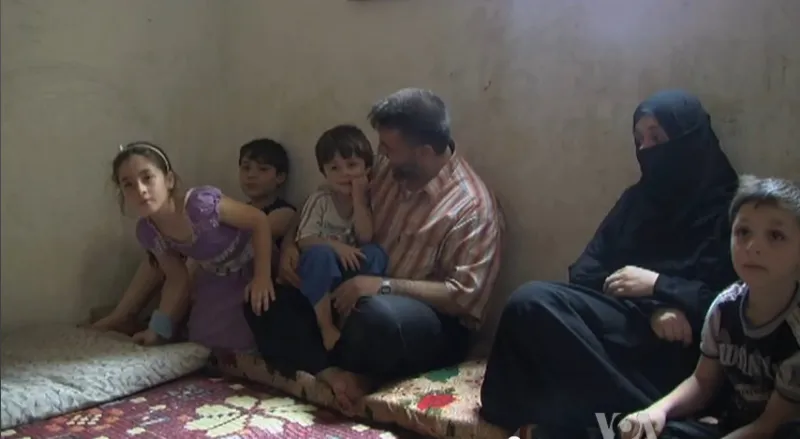
Photo: Voice of America News: Margaret Besheer reports from the northern Lebanese city of Tripoli; "Syrian Refugees Seek Out Smugglers"., Public domain, via Wikimedia Commons
When Rania Khalil opened her specialty food import shop in Dearborn, Michigan, she did not hang a sign that said "authentic Syrian goods." She hung a photograph of her grandmother's kitchen in Aleppo. The distinction matters. For Khalil, the business was never primarily a commercial transaction. It was a declaration—a carefully constructed argument that her family's history deserved space on an American shelf.
"People walk in and they see the za'atar, the pomegranate molasses, the dried rose petals," she says. "But what they are really seeing is proof that we were always here, even before they knew to look."
Khalil is one of thousands of Syrian-born entrepreneurs who have built businesses across the United States over the past two decades, with a significant surge following the post-2011 refugee crisis. Their commercial footprint spans an extraordinary range—from family-owned restaurants in Brooklyn and Houston to tech startups in Silicon Valley, from textile retailers in Chicago to medical practices in suburban Ohio. What unites them is not industry or geography but a particular kind of dual consciousness: the daily negotiation between market demands and cultural integrity.
The Weight of Representation
For many Syrian business owners, the pressure to represent their community—fairly and fully—is a burden that American-born entrepreneurs rarely carry. Every menu, every storefront, every client interaction becomes a potential teaching moment, whether they invite it or not.
Samir Hadad runs a software consulting firm in Austin, Texas, that employs a team of eighteen, several of whom are also Syrian Americans. He speaks carefully when describing what it feels like to be, as he puts it, "the Syrian guy in the room" at every pitch meeting.
"There is always a moment where someone makes a comment—sometimes well-meaning, sometimes not—about where I am from," he explains. "I have learned to use it. I talk about the engineering culture in Syria before the war, the universities, the talent. I am not just selling my services. I am correcting a story."
This corrective impulse runs through Syrian entrepreneurial culture with remarkable consistency. Business owners describe using their commercial platforms to push back against reductive media narratives, to introduce American customers to Syrian history that predates the conflict, and to demonstrate a complexity that headlines rarely afford their community.
Feeding Two Tables
The restaurant industry remains one of the most visible arenas of Syrian entrepreneurial life in America, and it is also the most symbolically loaded. Syrian restaurant owners frequently describe the challenge of serving two distinct audiences simultaneously: a Syrian diaspora community hungry for the specific flavors of home, and a mainstream American clientele approaching the cuisine as a discovery.
Leila Mansour, who co-owns a Damascus-style restaurant in Washington, D.C., describes calibrating her menu as an exercise in ongoing diplomacy. "My Syrian customers will know immediately if the kibbeh is not right," she says with a laugh. "They will not say anything, but they will not come back. And my American customers—they want to understand what they are eating. They want the story."
Mansour has responded by training her front-of-house staff to explain dishes in historical and cultural context, not merely in terms of ingredients. A plate of fattoush becomes an entry point into Levantine agricultural traditions. A bowl of ashteh leads to a conversation about Syrian dairy culture. "Food is the most accessible door," she says. "Once someone sits at your table, they are already a little less afraid of you."
This pedagogy-through-cuisine model has emerged organically across Syrian-owned restaurants in cities from Seattle to Miami, suggesting a collective, if uncoordinated, understanding that the dining room is also a classroom.
Capital, Community, and the Gaps Between
Despite their entrepreneurial energy, Syrian business owners face structural obstacles that extend well beyond the challenges confronting any small business. Access to capital remains a persistent barrier. Many Syrian Americans—particularly those who arrived as refugees—lack the credit histories, collateral assets, and established banking relationships that traditional lenders require. Community lending organizations and microfinance initiatives have filled some of this gap, but the disparity remains significant.
Khalil recalls being turned down by three separate banks before securing a small business loan through a nonprofit lender. "They saw a Syrian name, a refugee background, no property in this country," she says. "They did not see someone who had run a business in Syria for fifteen years."
Language barriers compound the difficulty for first-generation owners, particularly in navigating the administrative complexity of American business licensing, tax compliance, and employment law. Several entrepreneurs interviewed for this article described relying on their American-born children to manage regulatory paperwork—a dynamic that inverts the traditional parent-child knowledge hierarchy and carries its own emotional weight.
What Success Looks Like From Here
For Syrian entrepreneurs, the definition of success is rarely purely financial. It is entangled with questions of legacy, visibility, and obligation—to the community left behind, to the community building itself here, and to the generation that will inherit both.
Hadad speaks about hiring deliberately within the Syrian American community, particularly for younger professionals who are navigating an American job market that may not yet know how to receive them. "If I made it to a place where I can employ people, then I have a responsibility," he says. "That is not charity. That is how communities build themselves."
Khalil, for her part, has begun hosting cultural education events in her shop—evenings where she invites local schoolchildren to learn about Syrian geography, history, and food traditions. The events are not revenue-generating. They are, she says, the most important thing she does.
"My grandmother never thought her kitchen would end up in Michigan," she says, glancing at the photograph still hanging above the door. "But here it is. And it is still teaching people."
The American Dream, in its most familiar telling, is a story about individual ambition and economic ascent. Syrian entrepreneurs are not rejecting that story. They are expanding it—insisting that belonging and memory are not obstacles to success but its most essential ingredients.