A Box With No Room for Aleppo: Syrian Americans and the Census That Will Define Them
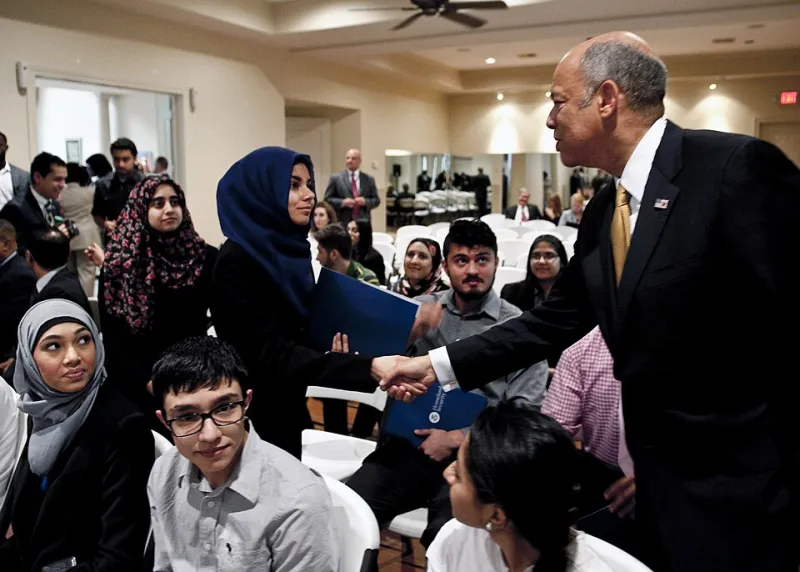
Photo: DHSgov, Public domain, via Wikimedia Commons
On a recent Saturday in Dearborn, Michigan, a folding table outside a halal grocery carried stacks of census explainers in Arabic and English. Volunteers asked shoppers a question that sounds simple and is not: How do you write yourself down? The U.S. Census Bureau is in the middle of preparing for the 2030 count, and federal agencies are moving toward a dedicated Middle Eastern and North African category. The change, finalized in 2024 after years of advocacy, is meant to make Arab, Iranian, and other MENA communities visible in federal data. For Syrian Americans, it has opened a fight over recognition, resources, and the particularity of an identity shaped by war, displacement, and diaspora.
The promise of a checkbox
For many organizers, the new category is overdue. Federal surveys have long folded MENA respondents into the White category unless they wrote in an ancestry, making it difficult to measure language access, health disparities, educational attainment, and housing needs. A separate checkbox could give Syrian American communities a stronger claim on federal resources and a clearer picture of where they live. It is not a symbolic exercise. If you cannot count a community, you cannot budget for it.
Rania Mansour, a demographer who advises community groups in Illinois, says the category could also improve political representation. Local officials use census data to draw districts, site clinics, and plan English classes. Philanthropies use it to decide where to send grants. For a community that has grown through refugee resettlement and family reunification, she argues, visibility is a form of protection.
The fear of dilution
But the checkbox also raises a question that Syrian Americans have been arguing over for years: Is it better to be counted broadly or precisely? MENA is a region, not a nationality. Syrians may be tabulated alongside Lebanese, Egyptian, Palestinian, Iranian, and other groups with different histories, migration patterns, and needs. Some Syrian American organizers worry that a broad category will blur the distinctions that matter: who arrived as a refugee, who is stuck in family reunification, who is rebuilding ties in Damascus, who holds temporary protected status, who is a third-generation American with no memory of migration.
The Census Bureau will collect detailed write-in responses, and advocates say those details must be published, not buried. But small populations can disappear in sampling error and privacy protections. A Syrian family in Jacksonville may be the only one on its block. If the category is too broad, the community becomes a footnote inside a footnote.
Counting in a climate of fear
Timing matters. In 2026, census preparations are unfolding in a political climate that many Syrian American households experience as hostile. Immigration enforcement, proposed budget cuts, and anti-immigrant rhetoric have made some families reluctant to open the door or answer questions, even with confidentiality protections. Organizers in Chicago and Anaheim say they are spending as much time reassuring people about the census as explaining it.
The census is not a neutral mirror. It is a political instrument, and every category is a decision about who belongs. Syrian Americans know this intimately. They have spent years explaining that Syria is not a single story, that Aleppo and Damascus and Homs and the diaspora are not interchangeable. A new box may make them legible to the state. It may also invite them to disappear into a regional label that says little about the lives they actually lead.
What recognition requires
The fight is not really about a box. It is about what comes after. Syrian American groups want detailed tabulation, language assistance, community consultation, and a commitment that the category will not become a substitute for targeted services. They want the Census Bureau to hire Arabic-speaking enumerators and to work with trusted local institutions. They want the data to be used to fund the things families need: health care, schools, housing, and legal aid.
If we were Syrian, we might ask whether a checkbox can hold a neighborhood, a dialect, a grief, a grocery list. It cannot. But it can be a beginning. The census asks people to fit into categories. Syrian Americans are asking the category to fit them.