The Ledger on the Kitchen Table: Syrian American Families and the Price of Pressure
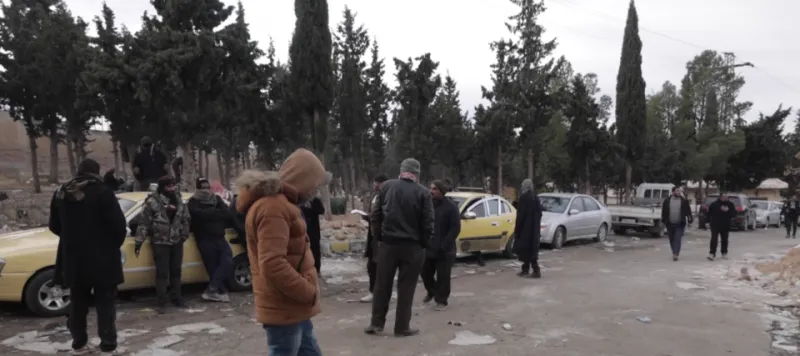
Photo: Voice of America, Public domain, via Wikimedia Commons
On a Thursday night in Paterson, New Jersey, Amal Satouf sets her phone face up on the kitchen table and opens a spreadsheet. Her cousin in Homs needs $180 for insulin. Her brother in Damascus says the pharmacy has the medicine but not the diesel to keep it refrigerated. Her nephew in Chicago says the United States should keep the pressure on. No one at the table disagrees about the regime's brutality. They disagree about what American power should do next.
Washington is again debating sanctions, humanitarian exceptions, and reconstruction aid for Syria. In 2026, the argument has moved from whether to engage to how much relief can be delivered without legitimizing a government that many Syrians still regard as predatory. The debate is conducted in hearing rooms and op-eds. It lands first on kitchen tables like Amal's.
How pressure travels
Sanctions are not a single wall. They are a maze of designations, banking rules, and fear. Even when remittances are technically allowed, banks and money transfer operators refuse to touch Syria because compliance costs are high and reputational risk is real. Families route money through hawala networks, paying premiums and accepting uncertainty. A doctor cannot import equipment. A pharmacist cannot stock a medicine. An aid group spends months proving that a shipment is humanitarian.
The result is a form of collective pressure that reaches people who have no vote in Washington. The Caesar Act, enacted in 2020, was designed to deny the Syrian government the resources to wage war on its own people. Its intentions were clear. Its machinery is blunter. Syrian Americans who support its goals still describe the daily toll: a cousin who cannot pay for surgery, an aunt who waits for a visa, a neighborhood that cannot rebuild a school because every transaction is suspect.
The kitchen table as a policy seminar
Syrian American families are not monolithic. Some support targeted sanctions and argue that relief without accountability fuels corruption. Others want broad exemptions and say the regime has learned to shift costs onto civilians. Amal's nephew, a college student in Chicago, believes pressure is the only language the government understands. Her brother in Damascus believes pressure is a fiction that educated people in safe countries tell themselves. Amal keeps the spreadsheet open and says nothing.
These arguments repeat across the diaspora, in Detroit and Houston, in San Diego and Jacksonville. They are not abstract disagreements. They are disagreements about whom to trust with scarce resources, about whether suffering can be a strategy, about what it means to love a place you cannot protect.
The cost of being a bridge
Diaspora families are asked to be both witnesses and conduits. They send money, navigate licenses, fill out aid applications, and translate the language of American policy for relatives who have never met a congressman. They are exhausted. A policy that claims to care about Syrians should listen to them, not only to the experts who study them.
If we were Syrian, we would ask Washington to see the difference between a regime and a people. We would ask for smart sanctions that target the machinery of repression, not the medicine cabinet. We would ask for transparent humanitarian licensing, support for remittance channels, and reconstruction aid conditioned on rights but not withheld until perfection arrives. Pressure and relief are not opposites. They are tools, and tools have victims.
At Amal's table, no one needs a briefing memo. They need a policy that can tell the difference.