Before It Is Gone: The Syrian Americans Racing to Rescue a Culture From Erasure
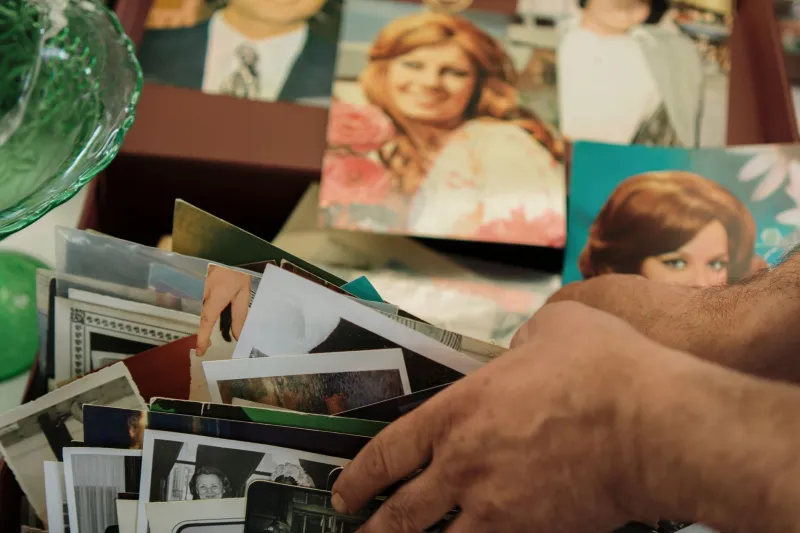
In a spare bedroom of her apartment in Brooklyn, Hana Qassem has built what she calls, only half-jokingly, "the world's most disorganized museum." Stacked against one wall are binders of scanned photographs—her grandmother's neighborhood in Aleppo, documented street by street through images gathered from relatives across three continents. On a shelf above her desk sit three thumb drives, each labeled with a different Syrian city name, each containing audio recordings of elderly community members describing foods, festivals, architectural details, and family histories that exist nowhere else.
"Some of this information lives in exactly one person's memory," she says, holding up a drive. "When that person dies, it's gone. There's no digital backup for a human being."
Hana is twenty-nine years old. She has no formal training in archival science, no institutional funding, and no guarantee that her collection will outlast her apartment lease. What she has is a growing conviction—shared by a loose, decentralized network of Syrian Americans engaged in similar work across the country—that the preservation of Syrian cultural heritage is not a project that can be deferred.
What Is Being Lost
The scale of cultural destruction in Syria since 2011 has been staggering. UNESCO and other international bodies have documented the deliberate targeting and incidental destruction of archaeological sites, historic city centers, traditional craft workshops, libraries, and community institutions. Palmyra. The old city of Homs. The covered markets of Aleppo. These losses are visible and have received international attention.
Less visible, but no less significant, is the erosion of living cultural knowledge: the oral traditions, the regional dialects, the specialized craft techniques, the community rituals, and the neighborhood-specific histories that exist not in stone or on paper but in the memories of people who are aging, scattered, and in many cases still navigating the trauma of displacement.
Dr. Mariam Tabbara, a cultural anthropologist at a university in the Pacific Northwest who focuses on Syrian heritage preservation, describes this as a second wave of loss. "The first wave was physical destruction," she says. "The second wave is demographic. As the generation that lived in pre-war Syria ages and passes away in diaspora communities, we lose their direct knowledge. And that knowledge is irreplaceable in a way that even destroyed buildings are not, because buildings can sometimes be reconstructed. Lived experience cannot."
The Grassroots Response
The Syrian American response to this crisis has been characteristically decentralized—individual families and small community organizations undertaking preservation work without coordination, often without funding, driven primarily by a sense of urgency that institutional channels have been too slow to address.
In Detroit, a group of volunteers associated with a local Syrian American community center has spent the past three years conducting oral history interviews with Syrian elders—recording memories of pre-war life, migration experiences, and cultural practices that their interviewees fear their own grandchildren will never know. The project, which operates almost entirely on donated time and modest community fundraising, has produced more than two hundred hours of recorded testimony.
In Houston, a Syrian American textile artist named Rima Saleh has been working to document and teach traditional embroidery techniques specific to the Idlib region—patterns and methods that were transmitted for generations through direct apprenticeship and that have no comprehensive written record. "My mother taught me. Her mother taught her. But my mother's teacher is gone, and the workshop where she learned is gone," Rima says. "If I don't write this down, if I don't teach it, that specific tradition ends with me."
Digital platforms have become a crucial tool for this work. Several Syrian American–led online projects have emerged in recent years, aggregating historical photographs, maps, recipes, architectural records, and community documents. One such initiative, operating out of the San Francisco Bay Area, has built a searchable database of pre-war Syrian city photographs contributed by diaspora members worldwide—a crowdsourced visual archive that has grown to include tens of thousands of images.
Enlisting the Next Generation
One of the central challenges facing Syrian American cultural preservation efforts is the generational gap between those who hold direct memories of Syria and those who were born or raised in the United States. Younger Syrian Americans often feel a genuine connection to their heritage but lack the specific cultural knowledge that would allow them to contribute to preservation work in a meaningful way—or to understand what, precisely, is at risk.
Many of the preservation projects profiled here have made the deliberate engagement of younger generations a core part of their mission. Hana Qassem has begun holding informal workshops in her Brooklyn community in which she trains other young Syrian Americans in basic archival methods—how to conduct oral history interviews, how to digitize physical materials, how to organize and store digital collections in ways that will remain accessible over time.
"The goal isn't just to create an archive," she explains. "It's to create archivists. Because I can't do this alone, and honestly, the collection I'm building is only going to matter if someone is around to use it and add to it."
Dr. Tabbara sees this intergenerational transfer as the most consequential element of the entire preservation movement. "The young Syrian Americans who are learning to do this work are not just preserving the past," she says. "They are becoming the custodians of a living culture. That is a fundamentally different relationship to heritage than simply inheriting it."
The Weight of Urgency
Those engaged in this work describe a particular emotional texture to it—a mixture of purpose and grief that is difficult to separate. To document something is to acknowledge, on some level, that it is in danger of disappearing. Every oral history interview is a reminder that the person being interviewed will not always be there. Every scanned photograph is an implicit admission that the place it depicts may never be recovered.
Rima Saleh describes sitting with elderly women in her community and learning embroidery patterns while simultaneously recording them, aware that the lesson and the documentation are happening simultaneously because there may not be time to separate them. "There's a sadness in it," she says quietly. "But there's also something else. Something that feels like defiance. Like we're saying: you did not take this. You cannot take this."
Hana Qassem reaches for a binder on the shelf beside her desk—photographs of a street in Aleppo's old city, taken sometime in the 1970s, contributed by a woman in her eighties who saw the project mentioned in a community newsletter and mailed her a package of prints with a handwritten note. The street in the photographs no longer exists in the form shown.
"She sent these because she wanted someone to keep them," Hana says. "She trusted that someone would care enough to keep them." She sets the binder down carefully. "That trust is the whole project, really. We keep things because someone trusted us to."
