The School Board Meeting Where Aleppo Showed Up: Syrian Americans Enter Local Politics
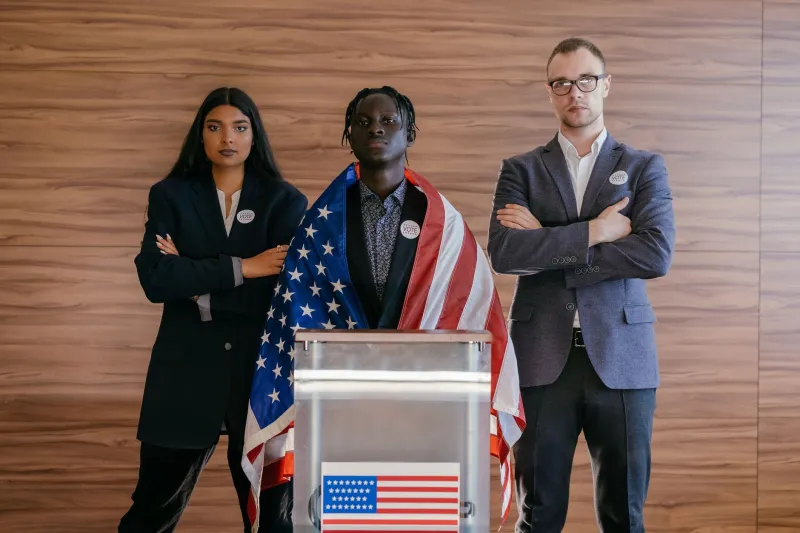
The meeting room in Dearborn Heights held maybe sixty folding chairs. By the time the school board candidate rose to speak, people were standing along the walls. She introduced herself in English, thanked the audience in Arabic, and then did something that still gets quoted in the community: she read aloud the name of her childhood school in Aleppo, and told the room that every child in this district deserved to feel that their school was theirs.
She won. She was not alone in running, and she will not be alone in office.
Why Now
The timing is not accidental. The Syrian arrivals of 2015 and 2016 — many of them professionals who rebuilt their lives with astonishing speed — have now been American citizens long enough to vote, and long enough to be voted for. Their children are in the public schools. Their small businesses sit on the main streets of towns from Clarkston, Georgia to El Cajon, California. Local politics is where their stakes are most concrete: zoning for a bakery, curriculum for a daughter, a police contract, a budget.
The refugee experience, candidates say, is itself a political education. People who have lived under a state that failed them do not take a school board meeting lightly.
Suspicion From Without, Expectations From Within
The obstacles arrive from two directions. From outside: the nativist suspicion that has followed Syrian Americans since 2015, when half the nation's governors declared their state closed to refugees. Candidates report campaign literature that questions their 'loyalty,' and forum questions that would never be asked of a candidate named Smith. Several describe the moment they realized their own name on a lawn sign was, for some neighbors, a political statement in itself.
From within the community, a different pressure. Some elders urge caution — don't make trouble, don't attract attention, be grateful. Others expect the new officeholder to function as a community advocate on every issue, foreign policy included, which no city council seat can carry.
What the Campaigns Reveal
Ask these candidates what their campaigns are about, and almost none of them say 'Syria.' They say bus routes. They say the achievement gap. They say the storm drain on Fourth Street. This is not evasion; it is the argument itself. Belonging, they are demonstrating, is not declared. It is performed — in budget hearings, at ribbon cuttings, in the unglamorous machinery of American local government.
There is a deeper current beneath it. Many of these candidates are the same people who spent a decade filling out refugee sponsorship paperwork, wiring money home, and explaining their homeland to skeptical neighbors. Running for office is the logical conclusion of that labor: if you are going to spend your life translating Syria to America, at some point you want the pen.
The Long Game
Political scientists will note that immigrant communities have always followed this arc — arrival, establishment, aspiration. What is different is the speed, and the confidence. The first Syrian American wave is producing a second generation that treats public office not as an anomaly but as an option.
If We Were Syrian, we would read these local campaigns as something larger than a demographic milestone. A country that failed its people gave them nothing. A new country, whatever its frictions, hands them a petition form and a ballot line. The candidates now winning seats in American towns are answering a question the world asked for years — what happens to the displaced? — with the least dramatic and most powerful answer available: they run for school board, and they win.