Recipes Carried Across Borders: The Syrian Table as an Act of Survival
When Rania Khalil left Aleppo in 2013, she packed two suitcases. Inside one, folded between a daughter's school uniform and a husband's dress shirt, was a single notebook — handwritten recipes passed down from her grandmother, the ink already fading at the edges. "I could not take my mother's dishes," she says, speaking from her apartment in Dearborn, Michigan. "But I could take her knowledge. Her hands are in every page."
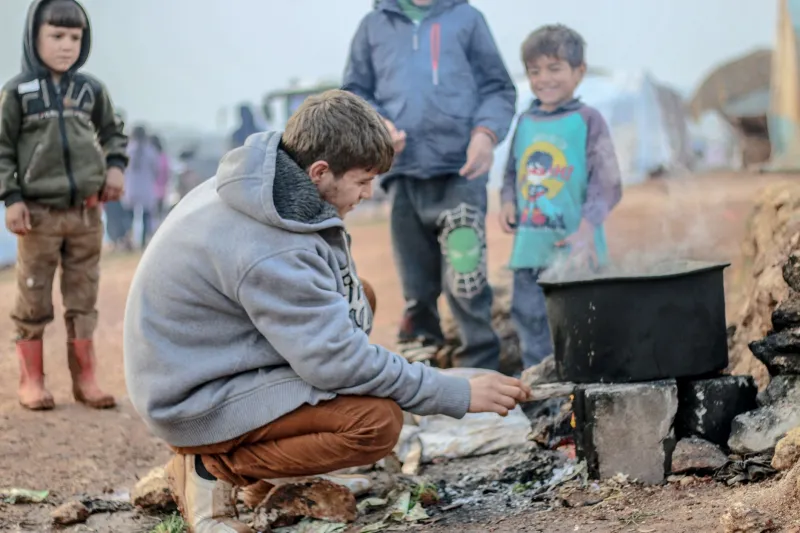
For millions of Syrians displaced by more than a decade of conflict, the kitchen table has become one of the most powerful sites of cultural preservation available to them. It requires no visa, no fluent English, no stable address. It asks only for the memory of how things once tasted — and the determination to recreate them, even imperfectly, in unfamiliar surroundings.
A Cuisine Rooted in Centuries of Crossroads
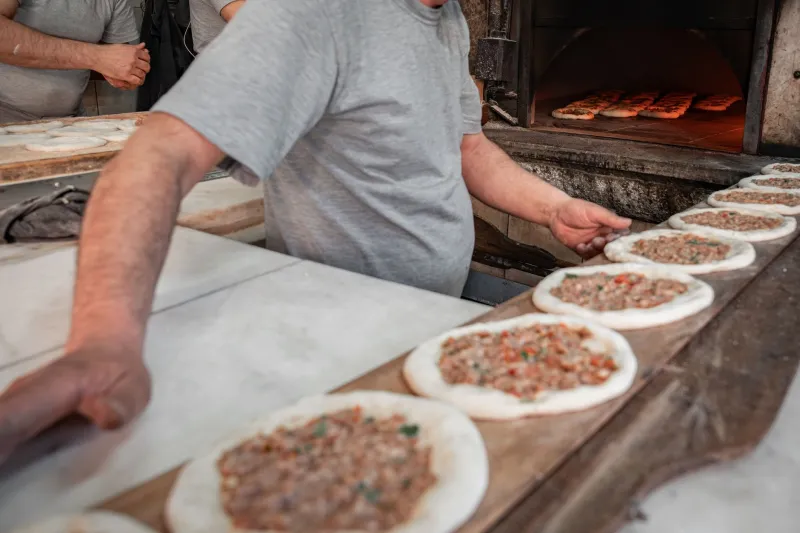
Syrian cuisine does not belong to a single tradition. Positioned at the historical intersection of Mesopotamian, Mediterranean, and Levantine culinary cultures, the Syrian kitchen has always been a place of synthesis. Dishes like kibbeh — a finely ground lamb and bulgur wheat preparation — carry ancient origins that predate modern borders. Fattet layers toasted bread, chickpeas, and yogurt in a construction that speaks to a tradition of resourcefulness, of transforming simple pantry staples into something extraordinary.
Damascus, once considered one of the world's great culinary capitals, was famous for its elaborate mezza spreads: dozens of small plates arriving in waves, designed not merely to feed but to extend conversation, to honor guests, to communicate the generosity of the household. Food, in Syrian culture, has never been incidental to social life — it is social life.
Understanding this context matters for American readers. When we learn that a Syrian family lost everything in an airstrike, we grieve abstractly. But when we understand that the grandmother's recipe for ma'amoul — the delicate rose-water shortbread filled with dates or pistachios, shaped by a carved wooden mold passed through generations — was also lost in that rubble, the loss becomes specific. It becomes irreplaceable.
Adapting Without Surrendering
In kitchens from Nashville to San Diego, Syrian refugees and immigrants are engaged in a quiet, ongoing negotiation between memory and availability. Pomegranate molasses, once purchased at a neighborhood market in Homs, must now be sourced from a Middle Eastern grocery store forty minutes away — or substituted with something that approximates its tartness but never quite matches it. The particular variety of flat-leaf parsley grown in Syrian soil has a flavor profile that cannot be replicated in an American supermarket.
Yet the adaptations themselves have become meaningful. Chef Mazen Abou Rached, who trained in Beirut and now runs a Syrian pop-up dinner series in Chicago, describes the tension with both humor and tenderness. "My mother calls me every time I post a photo of a dish," he says. "She says, 'That is not the right color.' She is always right. But she also says it tastes like home when she visits. So maybe the color does not matter as much as she thinks."
Abou Rached's dinners have become something of a community institution — not only for Syrian-Americans seeking familiarity, but for non-Syrian Chicagoans encountering the cuisine for the first time. He speaks deliberately about his role. "I am not just feeding people," he says. "I am explaining that there was a Syria before the bombs. There is still a Syria. It has flavors. It has a history. It is not just a crisis."
The Meal as a Political Act
There is an argument — one that gains credibility the longer the Syrian conflict continues — that cultural visibility is itself a form of political advocacy. When Americans share a Syrian meal, they are implicitly rejecting the reduction of Syrian people to a statistic, a refugee count, a talking point in an immigration debate.
Organizations like the Karam Foundation and Zaitoun — a cookbook project documenting Syrian recipes from displaced communities — have made this argument explicit, using food as an entry point for education and empathy. Yasmin Khan's landmark cookbook of the same name collected recipes from Syrian women across refugee camps and resettlement cities, presenting them not as victims but as custodians of a living culinary tradition.
For Rania Khalil in Dearborn, the political dimension is secondary to the personal — though she acknowledges they are inseparable. Every Friday, she prepares mansaf for her children and, increasingly, for their American-born friends who have developed an attachment to the dish. "They do not know Syria," she says of her youngest, who was four when the family fled. "But they know the smell of this food. When they smell it, something happens. They remember something they were never even there for."
This is the quiet miracle of culinary memory: it can be transmitted across generations, across oceans, across the rupture of war. It does not require the homeland to survive intact. It requires only someone willing to stand at a stove and refuse to forget.
What the Table Teaches Us
For American readers who have never met a Syrian family, food offers one of the most accessible and honest points of connection. It sidesteps the noise of political debate and asks a simpler, more human question: what does it feel like to sit at this table?
The answer, for Syrian families rebuilding their lives across the United States, is complicated. It feels like grief and like gratitude simultaneously. It feels like the particular ache of serving a dish that tastes almost right — close enough to remember, different enough to remind you of everything that has changed.
But it also feels, unmistakably, like resilience. Not the resilience of abstract inspiration, but the daily, embodied resilience of a mother who memorized her grandmother's recipes because she understood, on some level, that the notebook might not survive — but the knowledge could.
The Syrian kitchen table is still set. The invitation remains open.